
What Is The Chorus Of A Song? Key Elements & Examples
Oct 28, 2024
-
Tero Potila
Think about your favorite songs. What is the part you can't get out of your mind? The one you hum in the shower, sing along to in the car, or search for on repeat? It's usually one specific section: the chorus.
Understanding the role of each part in a song’s structure is crucial for any songwriter, but the chorus is undoubtedly the most important of them all.
It’s the focal point of the song. It’s the repeated section that carries the main musical and lyrical idea, delivering the emotional payoff you remember most.
I’ve worked on the writing and music production on enough songs to know that when the chorus lands, the whole song works.
When it doesn’t, no amount of clever verses can save it.
Once you understand how a great chorus is built, you’ll start hearing your favorite music differently. And writing better songs yourself.
What Is the Chorus of a Song?
The chorus is a section of a song characterized by its repetition and distinct melody. It typically delivers the main idea or theme, encapsulating the song’s emotional core.
It’s the most important part of a song.
Unlike the verses, which use different lyrics each time to advance the story, the chorus keeps the same words and melody throughout.
Historically, the word comes from the Ancient Greek khoros, a theatrical group that stepped back from the plot to state overarching truths.
In early 20th-century Tin Pan Alley music, the “chorus” was actually the primary 32-bar body of the song, with verses acting as brief spoken intros.
Modern pop inverted this structure, but retained the core purpose: making the main emotional theme stick in the listener’s head.
Where the Chorus Appears in Common Song Forms
In modern streaming-era songwriting, chorus placement has evolved.
To combat quick skips on streaming apps, tracks often open with a 10-to-15-second “preview chorus” or main hook before Verse 1.
Also, in EDM, Hip-Hop, and Pop, traditional choruses are often paired with or replaced by an instrumental “drop” or vocal-chop post-chorus.
A standard modern layout looks like this:
- Intro / Hook Preview (optional)
- Verse 1
- Pre-chorus (optional)
- Chorus / Drop
- Verse 2
- Pre-chorus (optional)
- Chorus
- Bridge
- Final chorus
- Outro
As you no doubt noticed, the chorus shows up at least twice, often three or more times.
This isn’t random.
The repetition among the different sections is what ensures you hear the catchiest part of the song enough times to remember it, but not so often that it wears out its welcome.
Chorus vs. Verse, Refrain, and Hook
It helps to know how the chorus differs from other parts of a song, since these terms get mixed up often:
- Verse: Tells the story or provides details to support the chorus. The lyrics change with each new verse.
- Chorus: A full, standalone section that states the main theme and emotional message. The same lyrics and melody repeat.
- Refrain: A brief, recurring line or melodic phrase, often featuring a catchy melody that appears at the beginning or end of each verse. It reinforces the main idea without becoming a full, separate section.
- Hook: The catchiest moment that grabs your attention. A hook usually lives in the chorus, but it can also be a guitar riff, a pre-chorus vocal run, or a synth line in the intro.
A catchy hook can help really dial in your chorus, so always keep that in mind when working on your chorus!
What Makes a Chorus Memorable?
As songwriters, we all strive to write the best and most memorable chorus possible with every song.
Here are my core techniques you can use to make yours unforgettable:
Emotional Vulnerability
In modern music, choruses are typically the emotional high point of a song.
Great tracks often use this section to express raw vulnerability, allowing the audience to connect on a deeper level.
Say the one thing your song is really about, and say it plainly so there’s no way for the listener to miss it or misunderstand it.
Contrast from the Verse
For a chorus to land, it has to feel different from what came before it.
The best way to do this is by writing a strong verse that sets up tension, often quiet and restrained, so the chorus can burst open.
Switching to a fresh chord progression when the chorus hits is a classic way to instantly transform the song’s harmonic mood.
I find another one of the most effective tricks is shifting the vocal zone: Try writing the chorus melody in a higher vocal register than the verse.
The added vocal exertion creates a natural physical intensity and acoustic brightness that instantly signals higher emotional stakes to the listener.
My Pro Tip: If your pre-chorus rises in pitch or energy, the chorus should answer with something bigger.
That shift is crucial; it’s what makes listeners feel the release.
Strong Rhyme Schemes and Rhythm
Rhyme schemes are a great way to create flow and memorability.
Mixing internal and external rhymes makes the lines easier to sing and more fun to listen to.
It’s a good idea to integrate a dynamic, catchy rhythm or unexpected beats, as they can turn your vocal melody into the infectious heartbeat of the track.
Slight Variations in Repeated Choruses
Another Important Tip: A common misconception in songwriting is assuming a repeated chorus must sound exactly the same every time.
Personally, I typically repeat the chorus exactly, but with slight variations that keep each chorus interesting and help elevate the entire song.
I’m not talking about using completely new lyrics.
Instead, focus on increasing spectral density and stereo width as the song progresses.
You can achieve this by adding double-tracked vocal harmonies, hard-panning rhythm guitars, or introducing high-frequency elements like tambourines alongside low-end sub-bass in the second and final choruses.
Try introducing some of these elements in the second chorus, then bring in the rest to the final chorus.
These additions widen the mix and make each repeat feel physically larger without altering the core melody.
One of my favorite production tricks: Keep your panning and spatial effects less extreme in the verses.
Automating reverb amount and time for some elements, for example, can work well for making the chorus really pop.
These small variations are the difference between a good and a great song.
Using a Bridge or Key Change for the Final Chorus
By the time you reach the final chorus, you want it to feel bigger than the ones before it.
Inserting a bridge or instrumental break before that last push sets the stage perfectly.
A key change that bumps up the chorus half a step is another classic tool that can breathe new, dramatic life into the finale.
Whether a key change works depends on the song. Sometimes it makes the song sound too cheesy, so watch out for that! Trust your gut.
How to Learn from Famous Choruses
I think studying great choruses is one of the best ways to improve your own songwriting.
Think about tracks like “Let It Be” by The Beatles or “I Will Survive” by Gloria Gaynor.
They have unforgettable choruses that have stood the test of time because they rely on simple, powerful lyrics embedded with universal themes.
Whitney Houston’s “I Wanna Dance with Somebody” uses dynamic contrast and an exuberant tempo to build from a controlled verse into a chorus that fills out her full vocal range.
Adele’s “Rolling in the Deep” captivates you with a dramatic, empowering chorus that perfectly encapsulates the song’s raw emotion.
Modern popular music hits like Carly Rae Jepsen’s “Call Me Maybe” prove that using the title of the song as the main lyrical idea guarantees instant recognition.
Popular Songs With Unusual (or No) Traditional Choruses
Not every song follows the rules.
“Bohemian Rhapsody” by Queen famously moves through distinct segments: a ballad, an operatic section, and hard rock. And it does all that without ever repeating a clear chorus.
Other genres, like classical or folk, sometimes favor a “through-composed” approach where the music constantly changes.
These cases prove that while a chorus is a standard tool, it isn’t a strict requirement for a brilliant piece of music.
Putting It Together in Your DAW
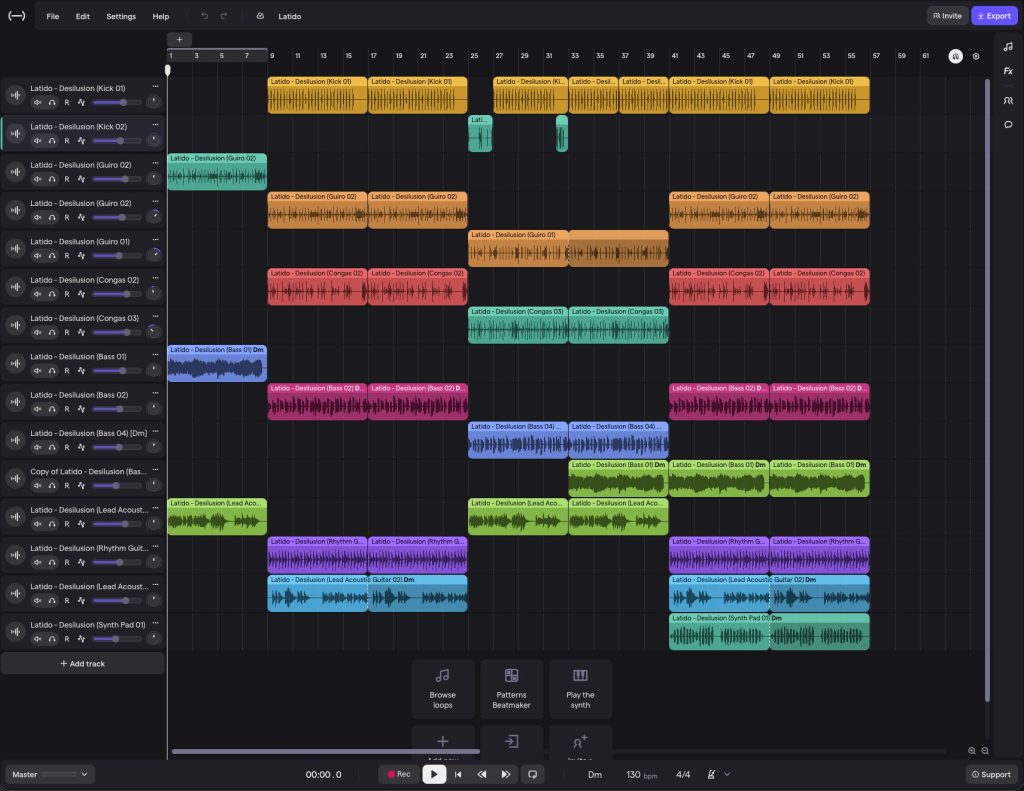
Personally, I often start by writing the chorus when working on a new song.
I just find it much easier to create the verses and bridge around a known target they’re supposed to support.
But there are times when the verses come to me first, and that’s fine too. There’s no right or wrong approach.
When you’re ready to produce your own songs and make their chorus hit hard, a DAW like Soundtrap Studio makes it incredibly easy to visualize and build your complete song structure.
You can color-code your chorus regions, duplicate them across the timeline to test arrangements, and use all the built-in effects to dial in your unique sound.
Like the Vocal Suite, it lets you quickly stack massive harmonies that can help make your chorus pop.
Conclusion
At the end of the day, crafting a great chorus isn’t about following a rigid set of rules; it’s about building a moment that stays with the listener long after the track finishes playing.
Each song is an opportunity to tell a story, and the chorus is your chance to make that story unforgettable.
In my experience as a songwriter and producer, the choruses that land the hardest are the ones that strip away unnecessary complexity to deliver one powerful idea with real feeling.
When you focus on clarity, contrast, and emotion, everything else falls into place, and your listeners will be singing along in no time.
About the author
Tero Potila is a professional music composer and producer. His career combining knowledge and experience from music, TV, film, ad, and game industries gives him a unique perspective that he shares through posts on teropotila.com.


